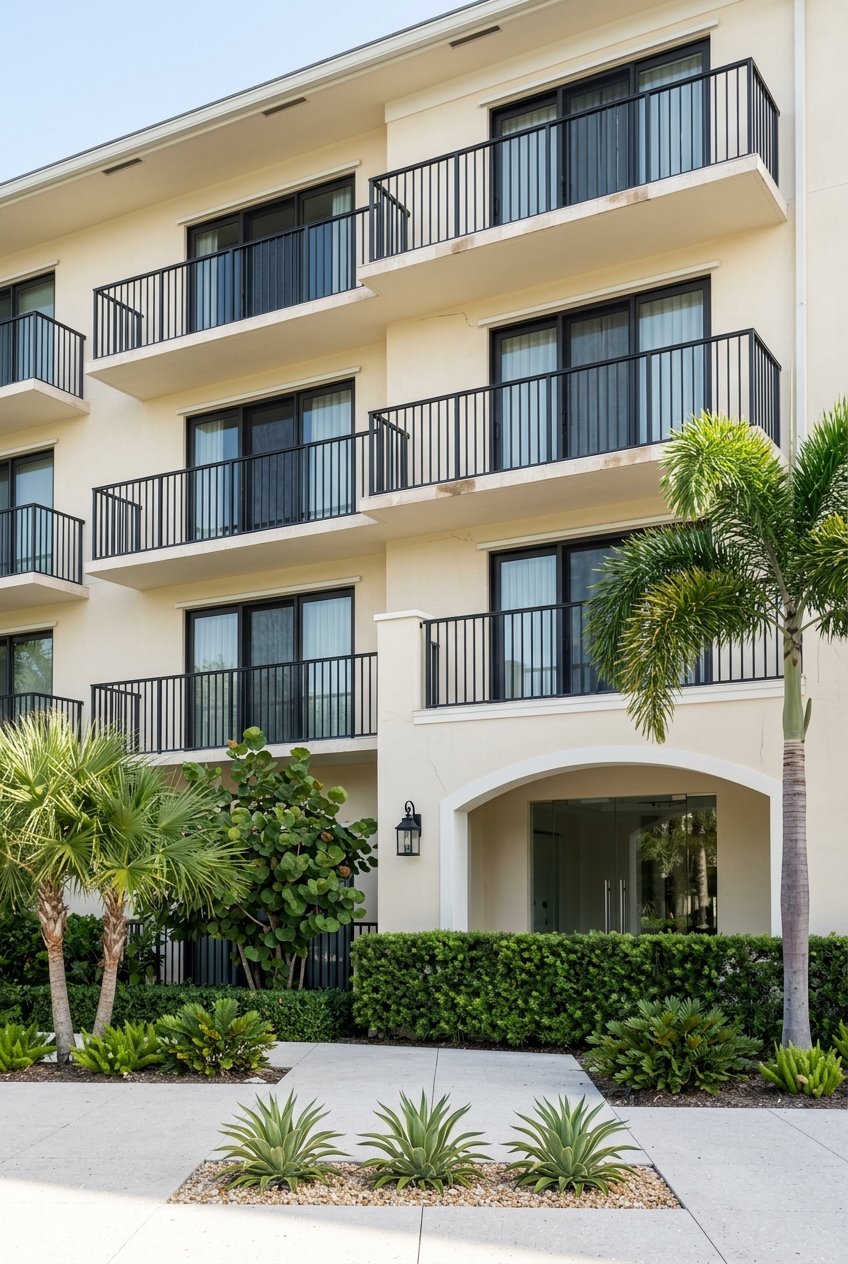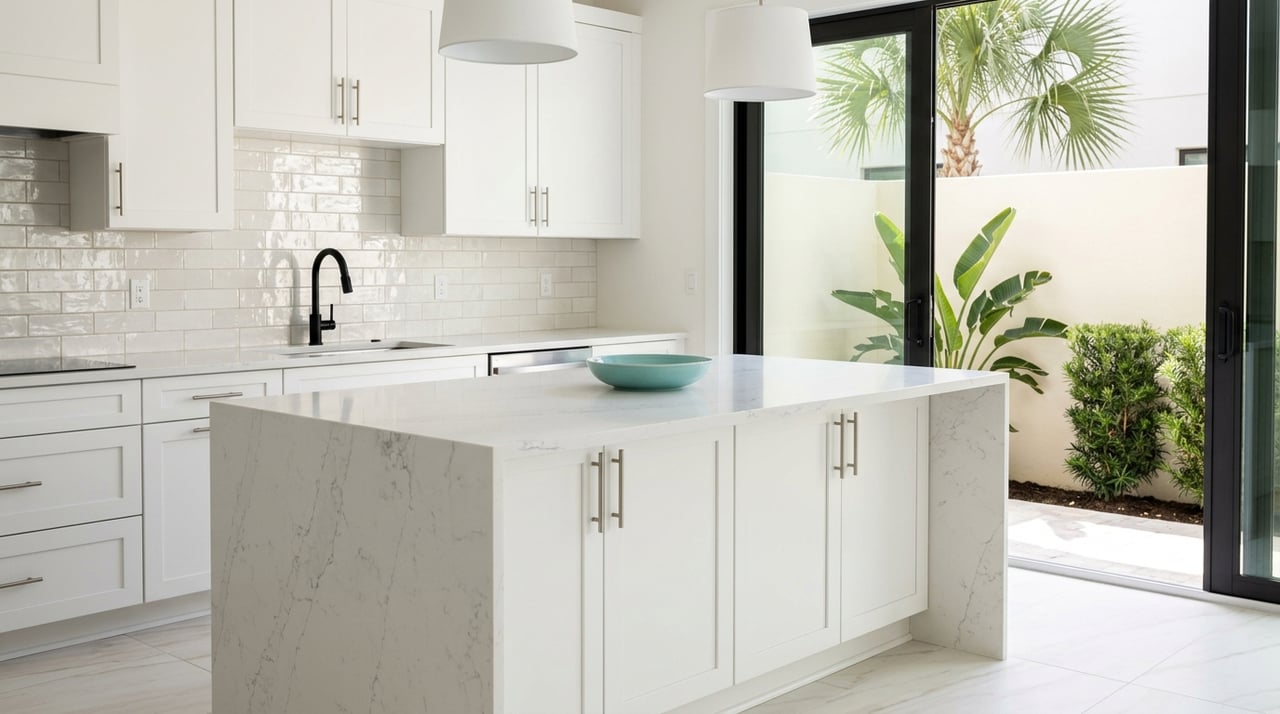
Scroll through Clearwater Beach condo listings this month and you'll notice something that wasn't a selling point five years ago. Right next to the granite counters and the Gulf view sits a line confirming that all special assessments have already been paid in full. It's there because in this market, that sentence sells harder than the countertops.
That single detail tells you more about buying a condo in Clearwater in 2026 than any median price you'll find on a portal. The headline numbers say condos are having a good year. Drill into any one building and the story changes depending on when it was built, how well its association planned, and whether it's already been through Florida's new structural reserve rules or is still bracing for them.
The Number That Looks Like Good News
Start with what the county-wide data actually shows. Across Pinellas County, the median condo sale price hit $275,000 in May 2026, up 5.8 percent from a year earlier, according to the monthly report Florida Realtors and the Suncoast Tampa Association of Realtors compile from Stellar MLS data. Single-family homes moved more slowly by comparison, up 3.5 percent to a median of $476,200 over the same period.
Zoom into Clearwater proper and the pattern holds. The median list price for condos and co-ops in the city climbed from $220,950 in August 2025 to $258,000 in August 2026, a jump of nearly 17 percent in a single year. Houses rose too, from $420,000 to $449,000, but at a slower clip.
If you stopped reading there, you'd conclude that Clearwater condos are the hot corner of the market right now, outpacing houses on price growth. That conclusion would be wrong for most of the actual buildings a typical buyer is looking at.
Where the Growth Actually Came From
Back up to February 2026, when Pinellas condo prices posted their sharpest jump of the year: a 26.5 percent year-over-year increase, with total dollar volume more than doubling. That number wasn't broad-based demand lifting every building. It was two new-construction towers in downtown St. Petersburg, Art House and 400 Central, closing out dozens of million-dollar-plus units in the same reporting month. A handful of closings at that price point can move an entire county's median overnight, the same way one very tall person walking into a room changes the average height without anyone else growing an inch.
The weekly data from late March 2026 makes the split even clearer. Tampa Bay condo dollar volume that week hit $108.5 million, up 35 percent from the same week in 2025. But within the Pinellas condo segment specifically, there were 18 price decreases and zero price increases. The upper tier was carrying the number. Everything underneath it was cooling.
This is the pattern to watch for anywhere a headline price looks unusually strong: ask whether it reflects the whole market or a few loud transactions at the top of it.
What This Looks Like Inside Clearwater's Own Buildings
Clearwater doesn't need to borrow St. Petersburg's example. The same divergence shows up inside its own beach communities. A market snapshot from mid-July 2026 broke out median prices by sub-area:
| Area | Median Price | Character |
|---|---|---|
| Sand Key | $999,000 | Premium Gulf-front condos |
| Clearwater Beach | $725,000 | Mixed properties and amenities |
| North Beach | $850,000 | Newer developments |
| Island Estates | $629,000 | Older housing stock |
That's a $370,000 spread inside one small stretch of coastline, and it isn't just about square footage or view lines. Newer construction and premium Gulf-front buildings tend to carry stronger reserve balances and cleaner inspection histories. Older, more affordable buildings, the kind that make up much of Island Estates and the interior Clearwater Beach stock, are more likely to be the ones facing overdue structural work.
You can see the same split in how long things sit. As of mid-August 2026, Clearwater Beach carried roughly 11.6 months of housing supply and a soft-market score from one local tracking service, even as its median sale price ticked up 2.7 percent year over year to $740,000. A separate snapshot taken a month earlier put the median closer to $725,000 and down sharply from the year before. Both can be true at once, because they're measuring different slices of a small, thin market where a handful of closings swing the average in either direction. That instability itself is a signal: when trackers can't agree on whether a beach market is up or down, the answer almost certainly depends on which specific buildings sold that month.
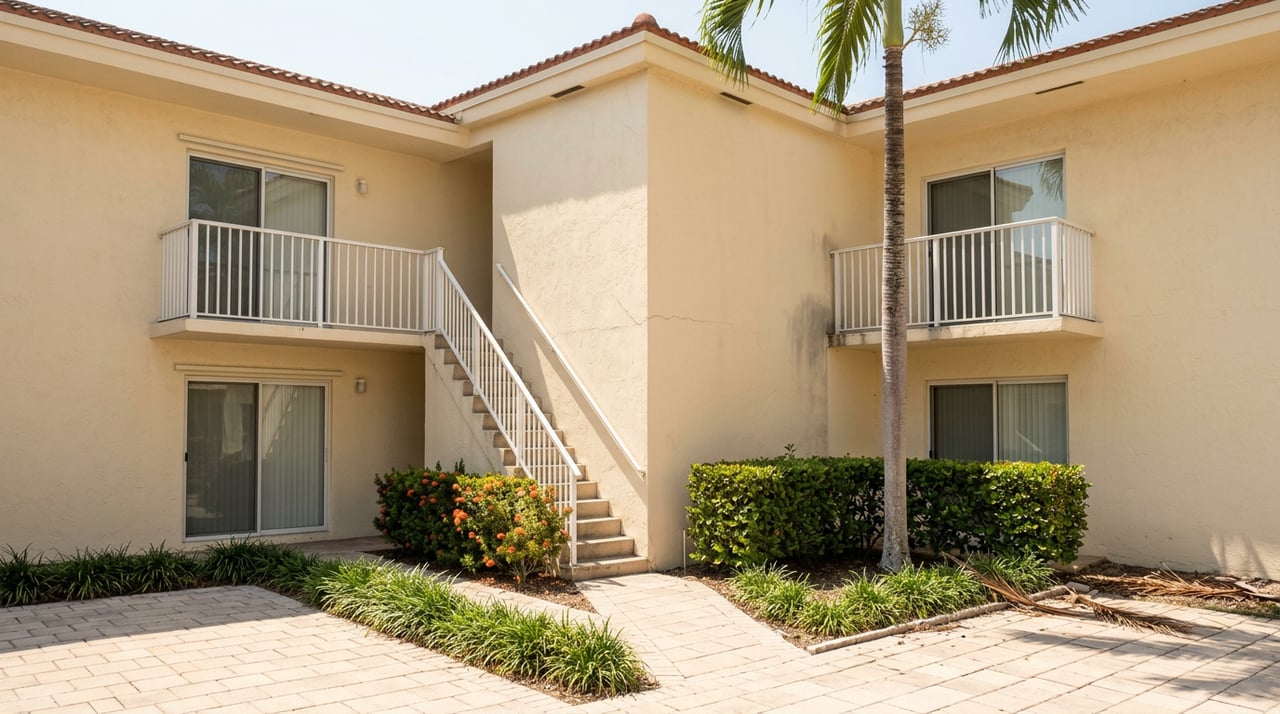
Look at one real complex to see it up close. Clearwater Point, an eight-building community near Sand Key Park that includes units dating to at least 1981, had a median list price of $519,500 in late August 2026, with units averaging 120 days on the market. That's double the typical pace for the broader Clearwater Beach area. A 1980s-built two-bedroom unit and a newer, better-capitalized building down the street are not the same asset just because they're both called condos.
The Mechanism Behind the Split
The reason older Florida condo buildings are moving slower and pricing more cautiously isn't mysterious. It traces directly to state law passed after the 2021 Surfside collapse.
Senate Bill 4-D, passed in 2022 and refined by SB 154 in 2023, requires condo and co-op buildings three stories or taller to complete a milestone structural inspection once they reach 30 years of age, or 25 years if they sit within three miles of the coast, and every 10 years after that. It also mandates a Structural Integrity Reserve Study, or SIRS, covering eight core components: roof, load-bearing structure, fire protection, plumbing, electrical systems, waterproofing and exterior painting, windows and exterior doors, and anything else over $25,000 tied to those systems. That study has to repeat at least every 10 years, regardless of the building's age.
HB 913, effective July 1, 2025, pushed the original December 2024 SIRS deadline out to December 31, 2025, with limited room to align it with a milestone inspection through the end of 2026. But the funding rule didn't soften. For any budget adopted on or after the end of 2024, associations can no longer vote to waive or underfund the reserves the study calls for. They have to fund according to the study starting with the 2026 budget year, according to the state's Division of Condominiums, Timeshares and Mobile Homes.
That's the gap between a $999,000 Sand Key tower with fresh reserves and a 1981 building where decades of underfunded dues are suddenly due all at once. Reported special assessments tied to this wave have run anywhere from $10,000 to well over $100,000 per unit in older coastal buildings, and a separate 2024 law, HB 1021, now requires associations with 25 or more units to post their governing documents, budgets, and reserve studies online, which is exactly why buyers can and should ask for them before writing an offer.
What to Actually Check Before You Offer
A soft asking price on an older Clearwater condo isn't automatically a bargain, and it isn't automatically a warning sign either. It's a prompt to look closer. Before you get attached to a unit, ask for:
- The most recent milestone inspection report, if the building is old enough to require one
- The current SIRS and whether the association has started funding to that schedule
- Meeting minutes or board communications about any pending or anticipated assessment
- The reserve fund balance relative to what the study says it should be
None of that shows up in a median price. All of it shows up in your monthly cost of ownership within the first year.
A Couple of Questions Worth Asking
Does this affect single-family homes too? Not directly. SB 4-D and the SIRS requirements apply to condominium and cooperative associations under Florida's Chapter 718, not single-family homeowners associations under Chapter 720. That's part of why Pinellas single-family prices have moved on a steadier, more predictable line than condos this year.
If a condo's asking price already dropped, does that mean the risk is priced in? Sometimes. A seller pricing against a known, already-paid assessment is a very different situation than a seller pricing against an unknown one still working its way through the association's books. The only way to tell the difference is to ask for the documents, not to read the number.
If you're weighing a Clearwater condo against a house, or trying to figure out whether a specific building's price reflects real value or a real problem, that's exactly the kind of building-level digging worth doing before you fall for a view. Jenny Sells The Block Tampa can pull the reserve study, the inspection history, and the comps that actually match your unit. Let's chat, find homes, or sell with confidence.
This article is general information, not legal, tax or financial advice. Consult a qualified professional about your situation.